
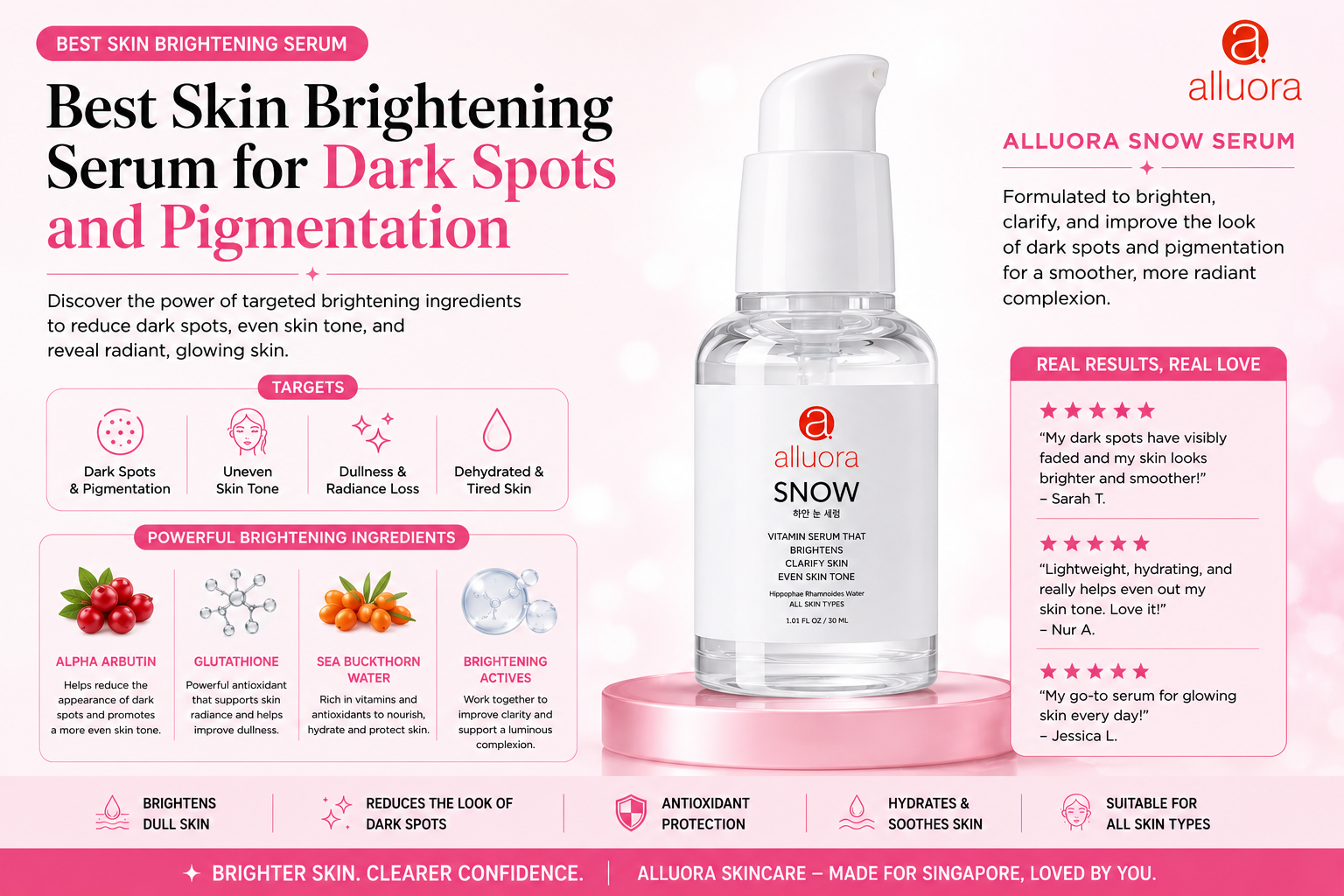
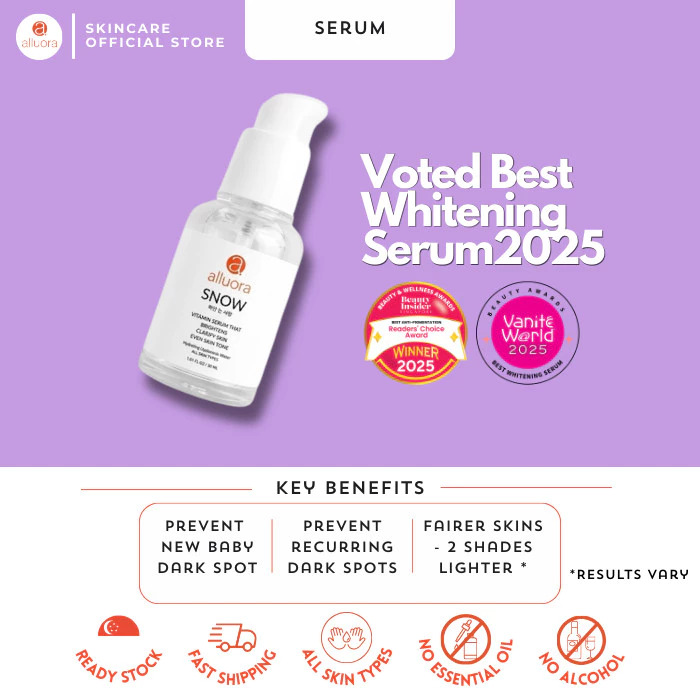
The right dark spot serum for Singapore skin typically falls into one of three proven categories: tranexamic acid formulations for melasma and post-inflammatory hyperpigmentation, niacinamide-based serums for barrier-friendly daily treatment, and vitamin C serums for sunspot brightening and overall luminosity. Among local options, Alluora’s brightening serums are a standout, a Singapore-founded brand with multiple beauty awards and a loyal community of tens of thousands, formulating specifically for the pigmentation concerns most common in Southeast Asia.
Choosing the wrong active for your concern is not just inefficient. It can trigger irritation that deepens the very marks you are trying to clear. This guide covers the science behind melanin overproduction, how to match an active to your skin tone and concern, a curated comparison of trusted picks available in Singapore in 2026, a safe layering sequence, and honest timelines so your expectations are grounded in clinical data rather than marketing claims.
For flat dark marks left after acne, choose a serum by checking its complete ingredient list, usage directions and suitability for your skin. Ingredients commonly used in products for uneven-looking skin include niacinamide, alpha-arbutin and tranexamic acid. A serum is one part of a routine that also includes gentle cleansing, moisturising and daytime sunscreen. Indented or raised acne scars are different from flat dark marks and may need professional assessment.
Some marks left after acne are flat areas of uneven pigmentation. A skincare serum may help improve the appearance of these marks over time, depending on its formulation and how your skin responds.
A flat dark mark is different from an indented or raised acne scar. A serum intended for uneven skin tone should not be presented as a treatment for changes in skin texture. If you are unsure what type of mark you have, or a spot is changing or concerning, ask a qualified skin professional for advice.
Check the complete ingredient list rather than choosing a serum based on one advertised ingredient. Ingredients found in products for uneven-looking skin include niacinamide, alpha-arbutin and tranexamic acid. The overall formula, your skin’s tolerance and consistent use also matter.
If your skin is easily irritated, follow the product directions and introduce a new serum gradually. Avoid adding several unfamiliar active products to your routine at the same time.
A serum is one step in your skincare routine. Gentle cleansing, moisturising and appropriate daytime sun protection also matter when you are caring for post-acne marks.
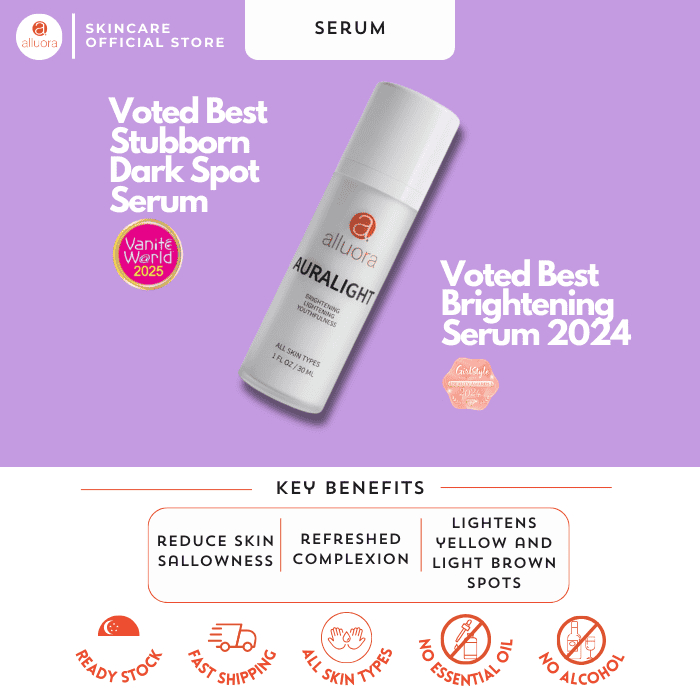
Alluora AuraLight Serum is a leave-on serum positioned for post-acne marks and uneven-looking skin tone. The ingredient list currently shown for AuraLight includes alpha-arbutin, niacinamide, tranexamic acid, panthenol and sodium hyaluronate.
If you are comparing products, read AuraLight’s current product page for the full ingredient list, usage directions and suitability information before buying. Choose a serum that fits your skin and the rest of your routine; no single product will suit everyone.
[Insert a link here to the official AuraLight Serum product page with the anchor text “View Alluora AuraLight Serum”.]
Follow the product’s current instructions for frequency. If your skin becomes irritated, reassess the products you are using and seek professional advice if needed.
In hot and humid weather, consider how a serum feels when layered with your moisturiser and sunscreen. A routine that feels comfortable is easier to maintain. Your skin type, sensitivity and the complete product formulation are more useful guides than a “best for everyone” claim.
One serum gaining attention for targeting yellow and light brown pigmentation is Alluora’s AuraLight Serum. Designed specifically for pigmentation, post-acne marks, and uneven skin tone, this serum combines dermatologist-recognized brightening ingredients with hydrating and soothing actives.
Post-acne marks form when inflammation triggers excess melanin production. This can leave behind:
Without the right skincare ingredients, these marks can take a very long time to fade naturally. That’s why many skincare experts recommend using a targeted Dark Spots Serum containing ingredients like Tranexamic Acid, Alpha Arbutin, Niacinamide, and antioxidants.
Community skincare discussions on Reddit also consistently highlight Tranexamic Acid and Alpha Arbutin as popular ingredients for hyperpigmentation and post-acne marks.
A post-acne dark mark is a flat area where the skin looks darker after a breakout has healed. An acne scar changes the skin’s texture and may look indented or raised. This distinction matters when choosing skincare: a serum for uneven-looking skin tone should not be expected to correct an indented scar. If you are unsure what kind of mark you have, speak with a qualified skin professional.
AuraLight Serum by Alluora is formulated to help reduce yellow and light brown pigmentation while improving skin brightness and texture. According to the product page, the serum helps:
Unlike harsh exfoliating treatments, AuraLight Serum focuses on combining brightening ingredients with soothing and hydrating components, making it suitable for daily use.
Dark spots form when melanocytes produce excess melanin in response to a trigger: UV exposure, inflammation from acne or injury, or hormonal shifts. Singapore’s near-equatorial position means the UV index commonly reaches 8–10 on clearer days, categorised as “very high” by the National Environment Agency, and typical monthly values rarely dip below 6. There is no seasonal reprieve for the pigmentation cycle here, which is why pigmentation is a persistent concern rather than a temporary one.
High humidity adds another layer of complexity. Sweat and a persistent surface water film can dilute serums and reduce their contact time with skin. Applying a lightweight, low-tack formulation to clean, slightly damp skin and allowing it to set before the next step gives active ingredients a better chance at doing their job in Singapore’s conditions.
Each active works through a distinct mechanism. Vitamin C as L-ascorbic acid inhibits tyrosinase to slow melanin production. Tranexamic acid disrupts melanocyte activity; a tranexamic acid serum at 2–5% concentration produces measurable melasma improvement by 8 to 12 weeks. Niacinamide reduces pigment transfer between melanocytes and keratinocytes while reinforcing the skin barrier. AHAs accelerate epidermal cell turnover, surfacing newer and more evenly toned skin over successive weeks.
These actives are not interchangeable. Using several simultaneously rarely compounds the benefit, it typically compounds the irritation. Picking the active that matches your specific type of dark spot is where most people go wrong, and where this guide can save you months of wasted effort.
Sunspots and age spots driven by cumulative UV exposure respond well to vitamin C and AHAs. Post-inflammatory hyperpigmentation from acne or injury is better addressed with niacinamide, azelaic acid, or a tranexamic acid serum, all of which target the inflammatory pigmentation pathway. Melasma, which is hormonally driven and notoriously persistent, often requires sustained tranexamic acid use or a combination approach, and routinely takes longer than other spot types to respond.
Starting with one active matched to your dominant concern and adding others only once your skin has adapted is the most reliable path to progress. Stacking multiple actives from day one is one of the most common reasons people experience setbacks rather than results.
For Fitzpatrick IV to VI skin tones, which cover a significant proportion of Singapore’s population, irritation is itself a major pigmentation trigger. An alpha arbutin serum or a niacinamide formulation are generally safer starting points than high-strength AHAs or vitamin C serums that cause stinging or flaking, because that irritation can produce new dark marks before the existing ones have faded. Fragrance-free, barrier-supportive formulations containing ceramides or glycerin are the wiser default.
Two ingredients require a specific caution in the Singapore context. Hydroquinone and tretinoin are prohibited in cosmetic products here under HSA regulations; both ingredients are reserved for prescription medicinal use under clinical supervision in Singapore. If you encounter an online product marketed as a brightening cosmetic that claims to contain either ingredient, treat it with serious caution regardless of where it is sold.
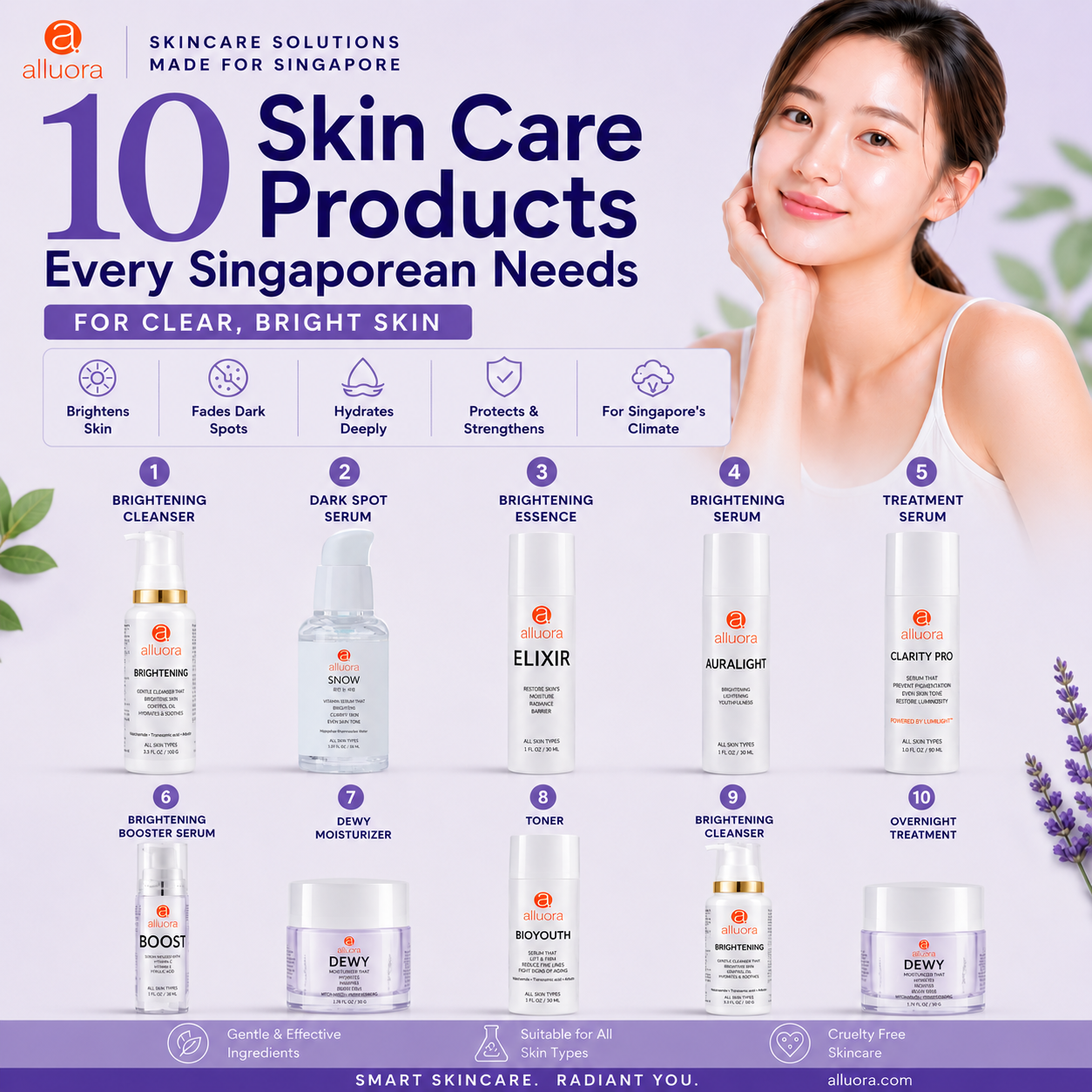
Alluora was founded in Singapore in 2013 and has spent more than a decade formulating for the pigmentation concerns most common in Southeast Asia. The brand holds multiple beauty awards and has built a community of tens of thousands of loyal customers on that track record.
Alluora’s Boost Serum is a radiance serum aimed at improving pigmentation, oil control and overall skin luminosity.
The morning sequence is straightforward: gentle cleanser, vitamin C serum if you use one, your dark spot serum (niacinamide, tranexamic acid, or azelaic acid formulations work well here), moisturiser, and then SPF 30 to 50+ as the final skincare step. Reapply sunscreen approximately every two hours during extended outdoor exposure, particularly between 11 a.m. and 3 p.m. when Singapore’s UV is at its peak.
Skipping sunscreen does not just slow progress, it actively reverses it. UV exposure perpetuates the melanin overproduction that the serum is working to interrupt. For melasma-prone skin, a tinted mineral sunscreen containing iron oxides offers broader protection against visible light, which can worsen this particular pigmentation type even on cloudy days.
A practical weekly rotation looks like this: retinoid on Monday, Wednesday, and Friday; chemical exfoliant on one separate evening such as Tuesday or Saturday; and recovery nights in between, where you cleanse, apply the dark spot serum, and moisturise. Do not combine a retinoid, an AHA, and a tranexamic acid serum in the same session.
If your dark spot serum already contains glycolic acid, mandelic acid, retinol, or salicylic acid, treat it as that active class and do not layer another ingredient from the same category on the same night. The goal is consistent, low-irritation treatment applied over several months, not the maximum number of actives in a single routine.
Clinical data gives a clear picture. Topical tranexamic acid typically shows visible improvement in melasma by 8 to 12 weeks. In a 120-person interventional study, 3% arbutin used twice daily produced a greater-than-50% MASI reduction in approximately 54% of participants at the 12-week mark. Retinoids begin improving skin turnover at 8 to 12 weeks, with continued gains over three to six months. Vitamin C serums may show subtle change at 6 to 8 weeks, but meaningful improvement often requires three to six months of consistent use.
Melasma and longstanding PIH take considerably longer than fresh post-acne marks, and Singapore’s unrelenting UV means results will stall without daily sunscreen. Switching products every four to six weeks is one of the most common reasons people see no improvement, treat 12 weeks as the minimum assessment point before concluding that a dark spot serum is not working for you.
Progress shows as gradual lightening of the spot rather than total elimination within the first month, improved overall evenness across the complexion, and reduced contrast between the mark and the surrounding skin. These changes are slower and subtler than most product marketing suggests, but they are the realistic indicators of a serum doing its job.
Escalate to a dermatologist when pigmentation is persistent despite consistent treatment, rapidly changing, asymmetric, or accompanied by other symptoms. Not all dark marks are the same condition; some forms of melasma and medication-induced pigmentation require prescription-strength intervention rather than an over-the-counter cosmetic serum, and a trained clinician is the right person to make that call.
The right dark spot serum is not about the highest price point or the longest ingredient list. It is about matching the active to your specific concern, layering it intelligently, and backing every session with daily sunscreen. Get these three fundamentals right and a well-formulated brightening serum has the environment it needs to work.
Alluora is a Singapore-founded brand with more than a decade of experience formulating for local skin concerns. Travel-size options let you test a formula before committing to a full bottle, and the Glow Club loyalty programme makes sustained, long-term use more rewarding, which matters because consistent treatment over months is what pigmentation correction actually requires.
Check Alluora’s next live shopping show on TikTok, Instagram, or Shopee to see the serums demonstrated in real time, get your specific questions answered, and access exclusive deals before they sell out.
No, hydroquinone and tretinoin are prohibited in cosmetic products in Singapore and are reserved for prescription medicinal use under HSA regulations. You should treat any cosmetic product marketed as containing either ingredient with serious caution, regardless of where it is sold.
Apply a lightweight, low-tack serum to clean, slightly damp skin and allow it to set before the next step to improve contact time in high humidity. This reduces dilution by sweat and surface moisture and gives the active ingredients a better chance to work in Singapore’s conditions.
Treat 12 weeks as the minimum assessment point before concluding a dark spot serum is not working for you. Clinical timelines in Singapore commonly show tranexamic acid improvements by 8–12 weeks and vitamin C often requires three to six months, so switching every four to six weeks undermines progress.
Yes, Alluora is a Singapore-founded brand (established 2013) that has spent more than a decade formulating for pigmentation concerns common in Southeast Asia and has multiple beauty awards and a community of tens of thousands. We offer travel-size options to test formulas before committing to a full bottle, a Glow Club loyalty programme to support sustained use, and live shopping shows on TikTok, Instagram, or Shopee where you can see demonstrations and access exclusive deals.
If you are searching for the best Dark Spots Serum for post-acne marks, pigmentation, and uneven skin tone, AuraLight Serum by Alluora is a strong option to consider. Its combination of Tranexamic Acid, Alpha Arbutin, Niacinamide, Bakuchiol, and hydrating ingredients targets multiple causes of discoloration while helping skin appear brighter, smoother, and healthier.
For skincare users in Singapore looking for a gentle yet effective pigmentation solution, this serum offers a balanced approach to treating post-acne marks without overly harsh ingredients.

© 2025 Alluora Pte Ltd (Tax Number: 201306743W). All Rights Reserved. All Rights Reserved.