
A dark spot is an area of skin that appears darker than the surrounding skin. Dark spots can develop after acne, sun exposure, inflammation, irritation or changes in pigmentation, and they commonly appear on the cheeks, forehead, chin and other areas of the face.
In Singapore, frequent sun exposure combined with a hot and humid climate can make pigmentation and uneven-looking skin particularly frustrating.
But what actually causes a dark spot? Why do some dark spots remain visible after acne disappears? And which skincare ingredients should you look for?
This guide explains the common causes of dark spots, different types of pigmentation and how to build a practical skincare routine for brighter, more even-looking skin.

A dark spot is an area where the skin appears darker than its surrounding area because of increased pigmentation.
Melanin is the natural pigment responsible for skin colour. When melanin production or distribution increases in a particular area, the result can appear as a brown, greyish or darker patch.
Dark spots can vary in:
Some appear after a pimple heals, while others develop gradually following repeated sun exposure.
Understanding the possible cause is useful because not every type of pigmentation should be approached in exactly the same way.
There isn’t one single cause of every dark spot.
Several factors can contribute.
One of the most common situations is a dark mark appearing after a pimple or acne lesion has healed.
Inflammation can trigger increased pigmentation in the affected area. The blemish itself may disappear while the darker-looking mark remains.
This is commonly associated with post-inflammatory hyperpigmentation (PIH).
Picking, squeezing or repeatedly touching acne may also increase irritation.
Sun exposure is another major factor associated with pigmentation.
UV exposure can stimulate melanin production and make some existing areas of pigmentation appear more noticeable.
This is why daytime sun protection is an important part of a skincare routine for dark spots.
Aggressive exfoliation, excessive scrubbing or products that irritate your skin can sometimes contribute to uneven-looking skin.
More aggressive skincare does not necessarily mean faster results.
A consistent, skin-compatible routine is generally a better approach.
Hormonal factors can influence some forms of facial pigmentation.
Pigmentation associated with hormonal changes can behave differently from a simple post-acne mark.
Persistent or concerning pigmentation may warrant professional assessment.
Over time, repeated exposure to sunlight and other environmental factors can contribute to visible changes in skin tone and pigmentation.
Understanding the type of dark spot you are dealing with can help you make more informed skincare decisions.
These appear where acne or inflammation previously occurred.
They may remain visible after the original blemish has healed.
Repeated UV exposure can contribute to areas of visible pigmentation, particularly on frequently exposed parts of the face.
PIH can occur after skin inflammation or irritation.
Acne is a common trigger, but it is not the only possible cause.
Not every darker patch is the same.
If you have pigmentation that appears suddenly, changes significantly, causes symptoms or concerns you, seek advice from a qualified healthcare professional or dermatologist rather than trying to diagnose it from appearance alone.
Singapore’s tropical environment makes several aspects of a dark-spot routine especially relevant.
Sun protection isn’t only a seasonal consideration.
People in Singapore can experience substantial UV exposure throughout the year.
High humidity can influence how heavy or comfortable skincare products feel.
Many people therefore prefer routines that layer comfortably without feeling excessively heavy.
Heat can also mean more sweating, while people with oily or combination skin may experience increased surface oil.
Gentle but effective cleansing helps remove sunscreen, sweat, excess oil and daily impurities before targeted skincare is applied.
The appearance of some dark spots can gradually improve, but the timeline varies significantly.
Factors that can influence their appearance include:
Avoid expecting overnight changes.
Instead, focus on a consistent routine that addresses both the appearance of existing pigmentation and factors that can make uneven-looking skin more noticeable.
There is no single universal product for every dark spot.
A more practical approach is to build a complete routine.
Start by removing excess oil, sweat, sunscreen, makeup and everyday impurities.
Choose a cleanser appropriate for your skin type.
Avoid aggressive scrubbing because you cannot physically scrub pigmentation away.
After cleansing, use leave-on skincare appropriate for your pigmentation concerns.
This is where products such as a dark spot serum or brightening serum may fit into the routine.
Moisturiser supports hydration and helps complete the routine.
Choose a texture suitable for your skin type and Singapore’s climate.
Daytime sun protection is particularly important when your skincare goals involve pigmentation or uneven skin tone.
Changing your entire routine every few days makes it difficult to understand what suits your skin.
Give an appropriate routine time while monitoring how your skin responds.
Several ingredients are commonly found in skincare products formulated for uneven-looking skin and pigmentation.
Niacinamide, a form of vitamin B3, is widely used in skincare.
It can fit into routines focused on:
Its versatility makes it a common ingredient in brightening-focused formulations.
Alpha-Arbutin is frequently used in products formulated for the appearance of pigmentation and uneven skin tone.
It is commonly found in targeted brightening products and serums.
Vitamin C and its derivatives are widely used in brightening skincare.
Vitamin C is also known for its antioxidant role, which is why it frequently appears in daytime and radiance-focused routines.
Tranexamic acid is another ingredient found in some skincare formulations designed for uneven-looking skin and pigmentation concerns.
Don’t overlook hydration.
Ingredients such as hyaluronic acid and other humectants can support skin hydration and make a skincare routine more comfortable.
You don’t necessarily need to build your routine around a single “miracle ingredient.”
A balanced pigmentation-focused product may combine different functions, such as:
Brightening support + antioxidants + hydration + skin-barrier support
More ingredients aren’t automatically better, however.
The complete formulation, concentration, product instructions and your skin’s tolerance all matter.
What’s the difference?
| Dark Spot Serum | Brightening Serum |
|---|---|
| More specifically positioned toward visible pigmentation | Broader focus on radiance and uneven-looking skin |
| Often used for post-acne marks or specific dark areas | Often used for overall dullness |
| Targeted treatment step | General brightening step |
| Applied after cleansing | Applied after cleansing |
| Should complement sunscreen | Should complement sunscreen |
There can be substantial overlap between these categories.
Rather than relying only on the product name, examine its ingredients, intended use and suitability for your skin.
A complicated 10-step routine isn’t required.
1. Cleanser
Remove overnight oil and buildup.
2. Targeted Serum
Apply your chosen serum according to its directions.
3. Moisturiser
Use a moisturiser appropriate for your skin.
4. Sunscreen
Finish with appropriate daytime sun protection.
1. Cleanser
Remove sunscreen, makeup, oil, sweat and impurities accumulated during the day.
2. Targeted Serum
Apply your targeted skincare.
3. Moisturiser
Finish with moisturiser.
A simple routine you can use consistently can be more practical than continually adding products.
If acne has healed but left a visible dark mark, avoid picking or aggressively scrubbing the area.
Instead:
Most importantly, distinguish between an active acne lesion and the pigmentation left behind after it heals.
The two concerns may require different approaches.
Pigmentation cannot simply be scrubbed away.
Excessive friction may cause unnecessary irritation.
A pigmentation-focused routine without appropriate daytime sun protection is incomplete.
More products don’t necessarily mean faster improvement.
Overcomplicating your routine can make it harder to determine what your skin tolerates.
Squeezing or picking blemishes can increase irritation and may contribute to more noticeable post-acne marks.
Skincare generally requires consistency.
Avoid judging an entire routine after only a few applications.
A product that suits oily skin may not necessarily be ideal for very dry or sensitive skin.
Choose the complete routine based on your individual needs.
If you’re selecting a dark spot serum in Singapore, consider more than just the active ingredients.
Texture and routine compatibility also matter.
In hot and humid weather, many users prefer products that layer comfortably underneath moisturiser and sunscreen.
Look for a formulation that:
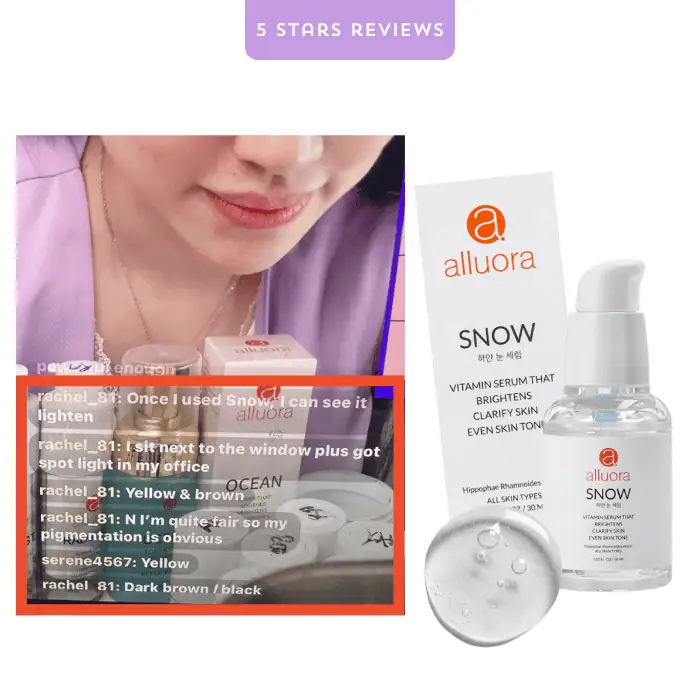
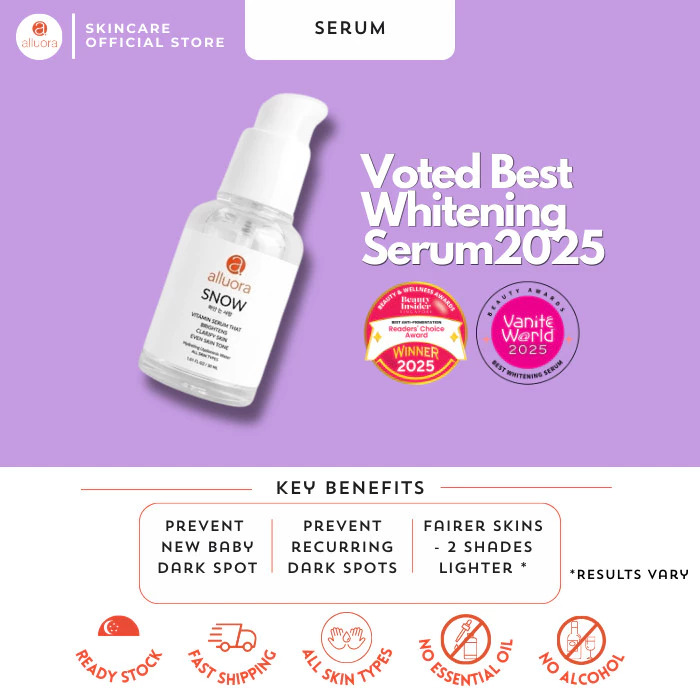
For those building a skincare routine around dark spots, post-acne marks, dullness and uneven-looking skin, Alluora Snow Serum can be used as the targeted serum step within a broader skincare routine.
According to Alluora’s current product information, the Snow Serum incorporates brightening-focused ingredients including Niacinamide and Alpha-Arbutin, alongside other skin-supporting ingredients.
Rather than expecting one serum to do everything, combine targeted skincare with gentle cleansing, moisturisation and consistent daytime sun protection.
Explore Alluora Snow Serum to review the current formulation, ingredients and recommended usage.
Website instruction: Link the product name above directly to the official Snow Serum product page.
There is no single timeline that applies to everyone.
A dark spot caused by a recent blemish may behave differently from pigmentation associated with repeated sun exposure or other factors.
The timeline can depend on:
Instead of promising a specific number of days or weeks, monitor gradual changes and keep your routine consistent.
Managing existing pigmentation is only part of the strategy.
Make appropriate sunscreen part of your daytime routine.
Avoid squeezing and repeatedly touching active blemishes.
Effective cleansing does not require aggressive friction.
Use an appropriate moisturiser.
If you change several products simultaneously, it becomes difficult to determine which one is responsible for a positive or negative skin response.
A dark spot is an area of skin that appears darker than the surrounding skin. It can occur after acne, inflammation, sun exposure or other changes in pigmentation.
Common causes include post-acne inflammation, sun exposure, skin irritation and some forms of hormonal pigmentation. Different causes can require different approaches.
Inflammation associated with acne can sometimes trigger increased pigmentation, leaving a darker-looking mark after the blemish itself has healed.
Some dark spots can gradually become less noticeable, but the timeline varies according to their cause, depth, skin type, sun exposure and skincare routine.
Niacinamide, Alpha-Arbutin, Vitamin C and Tranexamic Acid are examples of ingredients commonly found in pigmentation-focused skincare. The right choice depends on the complete formulation and your skin.
Niacinamide is commonly used in skincare products designed for uneven-looking skin and pigmentation concerns and can form part of a broader brightening routine.
A targeted serum can be incorporated into a routine for dark spots because it is a leave-on skincare step. Choose a formulation suitable for your skin and use it according to its instructions.
Daytime sun protection is an important component of a pigmentation-focused skincare routine because UV exposure can contribute to visible pigmentation.
This depends on the particular serum’s formulation and usage directions. Follow the manufacturer’s instructions and adjust according to your skin’s tolerance.
Seek professional assessment if a spot is new and concerning, changes noticeably in size, shape or colour, causes symptoms, or if you are uncertain whether it is ordinary pigmentation.
A dark spot can develop for several reasons, including acne, inflammation, sun exposure and changes in pigmentation.
The first step is understanding that not every dark spot is the same and that no single skincare product can address every possible cause.
For everyday pigmentation-focused skincare, keep the strategy simple:
Gentle Cleanser → Targeted Serum → Moisturiser → Sunscreen
Look for products that suit your skin type, avoid unnecessary irritation and maintain your routine consistently.
For people in Singapore, year-round sun exposure makes daytime sun protection particularly important.
And when choosing targeted skincare, focus on the complete formulation rather than chasing a single ingredient or expecting overnight results.
A consistent, well-balanced routine is the foundation for maintaining brighter, healthier and more even-looking skin.

© 2025 Alluora Pte Ltd (Tax Number: 201306743W). All Rights Reserved. All Rights Reserved.