

The most effective brightening serum for pigmentation and dark spots uses niacinamide (4–5%), tranexamic acid (2–5%), or vitamin C as its lead active. Clinical studies commonly report measurable improvement by 8–12 weeks with consistent use and daily photoprotection. This guide covers the science behind how these serums work, which ingredients match which type of pigmentation, and what realistic timelines look like based on published clinical data. It also covers where to buy trusted options in Singapore, including Alluora’s award-winning radiance serums, which have built a loyal following here since 2013.
Singapore’s year-round UV intensity makes pigmentation a genuinely common concern. The tropical climate also affects how serums perform: heat and humidity can destabilise L-ascorbic acid formulas quickly, which means packaging, storage, and formula quality matter as much as the ingredient list itself. Getting those decisions right from the start saves time, money, and frustration.
Fortunately, modern skincare ingredients make it possible to achieve brighter, clearer, and more even-looking skin. Choosing the best skin brightening serum is one of the most effective ways to target stubborn pigmentation while supporting healthy skin.
In this guide, we’ll explore the ingredients that actually work, what to look for in a skin brightening serum, and why Alluora Snow Serum has become a popular choice among those looking to improve dark spots and uneven skin tone.

Pigmentation occurs when excess melanin is produced in certain areas of the skin.
Common causes include:
UV rays stimulate melanin production, leading to sun spots and uneven skin tone.
After acne heals, dark marks can remain on the skin for weeks or months.
Hormonal fluctuations may trigger pigmentation concerns such as melasma.
As skin ages, pigmentation and discoloration often become more visible.
Pollution and free radicals can contribute to dullness and uneven skin appearance.
A skin brightening serum is a concentrated skincare treatment formulated with active ingredients that help improve skin radiance, reduce the appearance of dark spots, and support a more even complexion.
Unlike moisturizers or cleansers, serums deliver powerful ingredients directly to the skin, making them an important part of any brightening routine.
Melanin is the pigment that gives skin its colour, produced by cells called melanocytes through a process called melanogenesis. The enzyme tyrosinase drives the earliest and most critical steps: converting the amino acid tyrosine into DOPA, then into dopaquinone, which eventually becomes the brown-black or yellow-red pigment visible in your skin. UV exposure, inflammation, and hormonal shifts can all stimulate melanocytes to overproduce melanin, leading to patches that appear darker than the surrounding skin.
Most brightening actives work by interfering with melanogenesis, either blocking tyrosinase’s active site, reducing how much of the enzyme is produced, or slowing the transfer of finished pigment from melanocytes into surrounding skin cells. Note that some actives, such as niacinamide, primarily reduce melanosome transfer rather than directly inhibiting tyrosinase. This is why consistent daily application matters: you are managing a biological process that keeps running, especially when UV keeps triggering it.
Serums work best on surface-level pigmentation, specifically sun spots and mild PIH sitting in the upper layers of the skin. Melasma, which is hormonally driven and often deeper, responds more slowly and is more prone to returning. PIH from acne or irritation can fade well with the right actives, but only if you are not continuously re-triggering inflammation alongside treatment. Serums are unlikely to clear any pigmentation on their own if SPF is absent from your daily routine.
Stubborn melasma, particularly dermal melasma, often needs professional support alongside topical treatment. A dermatologist can confirm the type of pigmentation you are dealing with, which makes choosing the right serum far more straightforward.
L-ascorbic acid is the most studied vitamin C form for pigmentation. According to a comparative review published on Tandfonline, a 5% L-ascorbic acid treatment produced melasma improvement comparable to 4% hydroquinone, though more slowly, while a 25% formulation improved MASI scores over 16 weeks. The trade-off is stability: in Singapore’s heat and humidity, L-ascorbic acid oxidises quickly, so opaque packaging and cool, dry storage are essential. If the serum turns distinctly orange or brown, it has degraded and will not perform.
THD ascorbate (tetrahexyldecyl ascorbate) is a more stable derivative worth considering in a tropical climate. In a published study using a 30% concentration, 88% of participants showed hyperpigmentation improvement by week 8. The evidence base is smaller than for L-ascorbic acid, but its stability advantage is meaningful if you cannot store your serum in a controlled environment.
Niacinamide works differently from most brightening actives: rather than blocking tyrosinase, it reduces the transfer of melanosomes from melanocytes into keratinocytes. This gentler mechanism explains why it is so well tolerated across skin types. A placebo-controlled trial found that 5% niacinamide used twice daily produced approximately a 25% reduction in the size of age-related hyperpigmented spots after 8 weeks, according to a practical guide to over-the-counter hyperpigmentation treatments published on Wiley Online Library. A separate randomised trial of 4% niacinamide found meaningful improvement in melasma after 8 weeks of daily use.
Tranexamic acid at 2–5% has shown melasma improvement comparable to hydroquinone in some trials, though results across studies are inconsistent. Where it reliably performs is in combination: niacinamide paired with tranexamic acid often outperforms either ingredient used alone for stubborn pigmentation. This combination represents a well-supported starting point for anyone dealing with melasma or persistent dark patches.
Alpha arbutin at 3–4% has clinical support in combination serums, working alongside niacinamide or tranexamic acid. The evidence for alpha arbutin as a sole active is weaker; treat it as a useful supporting ingredient rather than a lead one. Kojic acid at 1–4% pairs well with other actives and has published evidence for pigment reduction, particularly in combination formulas. Azelaic acid at 15–20% is worth considering specifically when pigmentation coincides with acne or inflammation, as it addresses both concerns simultaneously.
For melasma, a niacinamide plus tranexamic acid combination formula has the strongest evidence base. For PIH from acne or past irritation, azelaic acid or niacinamide on its own is safer than actives that risk further inflammation. For general dullness or scattered sun spots, a vitamin C serum or a dual vitamin C and niacinamide formula is a practical first step. The key is matching the ingredient mechanism to the pigmentation type you are treating, not simply choosing the most potent serum available.
Inflammation from poorly tolerated actives can worsen PIH, particularly in deeper skin tones. Starting slowly is not optional: begin with one low-strength product two to three times weekly, patch-test first, and avoid layering multiple irritating actives at the beginning. SPF 30 or higher daily is essential and non-negotiable. A tinted formula with iron oxides offers visible-light protection, which matters for melasma specifically because visible light can maintain pigmentation even when UVB is blocked.
Niacinamide tends to show early changes in oiliness and texture at 2–4 weeks, with broader pigmentation improvement appearing by week 12 in a 5% niacinamide study. Vitamin C produces noticeable radiance improvements at 4–6 weeks; controlled 12-week research found significant photoageing improvement alongside evidence of new collagen formation. Tranexamic acid shows measurable lightening at around 4 weeks, with more visible results at 8–12 weeks. These timelines come from controlled clinical studies. Real-world results will vary depending on the product’s actual concentration, formulation quality, your consistency, and whether you are wearing SPF every day.
Twelve weeks of consistent daily use alongside SPF is a fair evaluation period for any brightening serum. If there is no visible change by that point, the formula may lack effective active concentrations, the product may not suit your specific pigmentation type, or continued UV exposure is overriding the serum’s work. A dermatologist consultation is the logical next step at that stage. Switching to a stronger product without understanding the cause of the stall is rarely the right call.
The brand has been formulating for Singapore skin since 2013, and the radiance range carries multiple beauty awards backed by a large loyal community. The serums are designed to address pigmentation, control oil, and improve overall skin luminosity, concerns that are particularly relevant in Singapore’s humid, sun-intense environment.
If you want to trial before committing to a full-size purchase, Alluora’s travel-size serum sachets are a practical, low-commitment entry point. The brand’s live-shopping shows on TikTok, Instagram, and Shopee offer real-time demos and direct Q&A. Glow Club members also receive rewards as part of the brand’s loyalty programme, making it a practical home for long-term skincare routines.
Alpha Arbutin is one of the most researched brightening ingredients.
Glutathione is a powerful antioxidant widely used in premium skin brightening products.
Vitamin C remains one of the most effective ingredients for glowing skin.
Niacinamide is known for improving overall skin appearance.
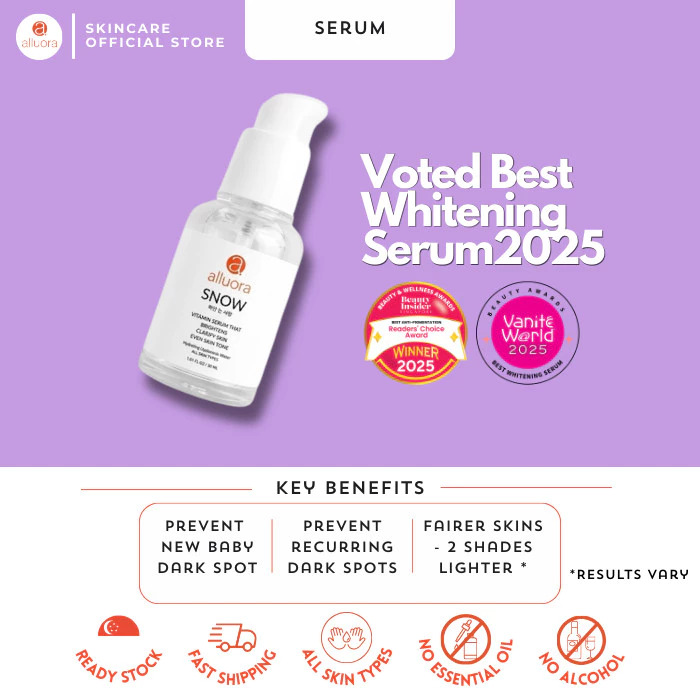
The Alluora Snow Serum is specifically formulated for individuals struggling with dark spots, pigmentation, dullness, and uneven skin tone.
The combination of Alpha Arbutin and Glutathione helps support brighter-looking skin while improving overall skin clarity.
Sea Buckthorn Water provides antioxidant support and helps maintain skin hydration, making the serum suitable for daily use.
Targets visible discoloration and uneven skin tone.
Promotes a radiant and healthy-looking complexion.
Helps skin appear smoother and more refined.
Unlike some brightening treatments that can feel drying, Snow Serum supports skin hydration.
Its lightweight texture makes it comfortable for daily use in humid weather conditions.
Users frequently report:
Results vary depending on skin type and consistency of use.
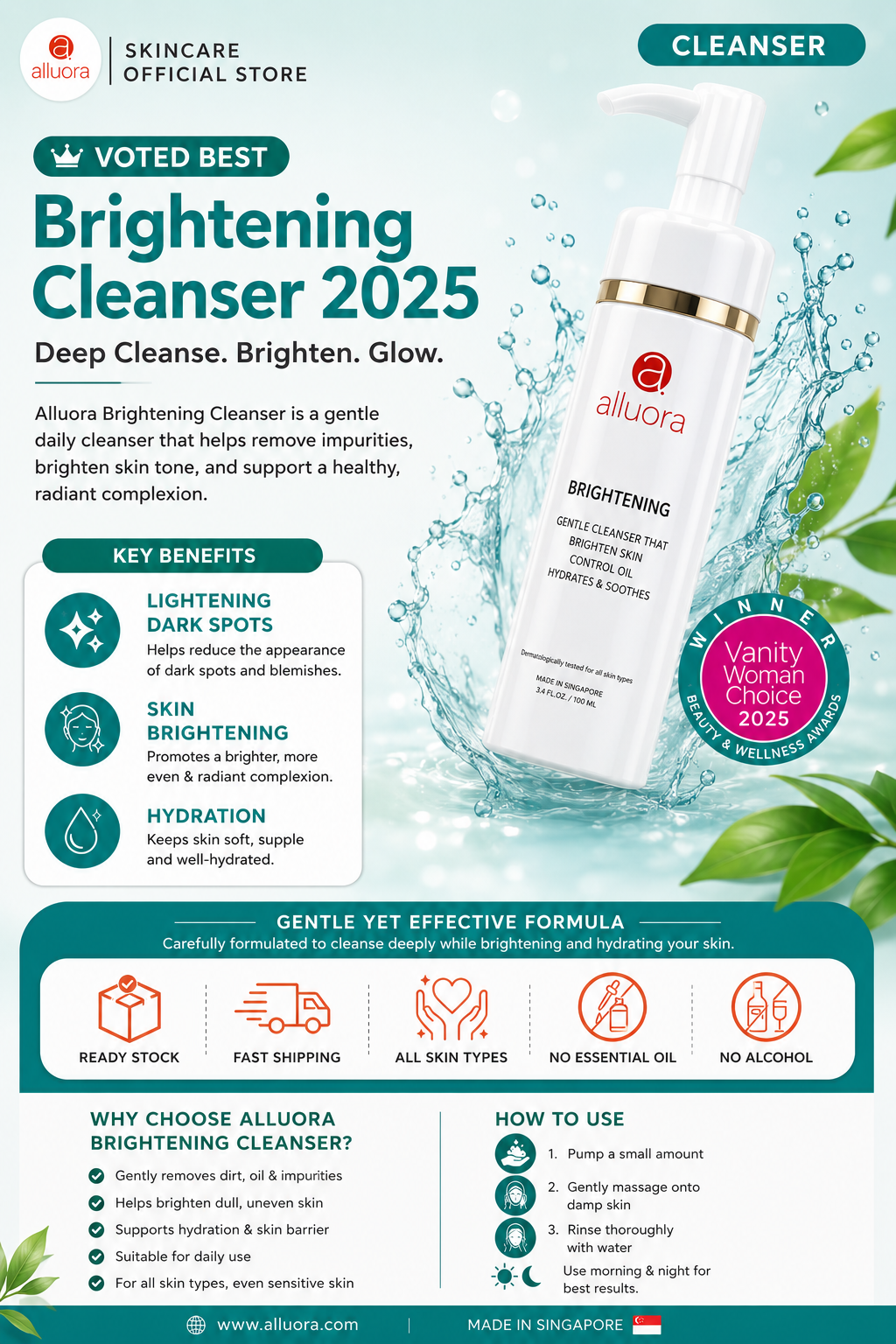
Use Alluora Brightening Cleanser.
Apply Alluora Ocean Toner.
Apply Alluora Snow Serum.
This is the primary step for addressing pigmentation and uneven skin tone.
Use Alluora Dewy Moisturizer.
Apply Alluora Dew & Glow SPF50+ daily.
Sun protection is essential when targeting pigmentation concerns.
Using multiple skin brightening products creates a complete approach to addressing dark spots and uneven skin tone.
Each product serves a different purpose:
Together, they help support brighter and healthier-looking skin.
Apply your brightening serum after cleansing and toning, before moisturiser. Vitamin C serums work best in the morning, where they complement your SPF’s UV protection. Use retinoids at night, in a separate routine from vitamin C, to minimise irritation risk. Tranexamic acid and niacinamide are flexible and can be used in either routine, but avoid layering tranexamic acid with AHAs in the same application step. Waiting 30–60 seconds between lighter and heavier textures reduces pilling and helps each product absorb properly.
Introduce each new active separately over several days before adding the next. This way you can trace any irritation to a specific product rather than guessing which one caused it. This is a critical step for anyone with reactive or darker skin tones.
Stinging, redness, dryness, and mild peeling in the first two weeks are common and often settle as skin adjusts. Persistent burning, swelling, blistering, or worsening dark patches are signals to stop immediately and reassess. For Asian skin tones, PIH from over-irritation is a real risk: using a bland barrier moisturiser alongside the serum from day one, and limiting applications to two or three times weekly initially, is a safer strategy than daily use from the start. Avoid any product that does not clearly disclose its active ingredients. Unregulated “whitening” creams may contain undeclared mercury or topical corticosteroids, both of which cause serious long-term harm according to the HSA and international health regulators including the FDA.
Know your pigmentation type, match the active ingredient to the concern, and commit to a brightening serum for 8–12 weeks alongside daily SPF. Those three steps will get you further than switching products every few weeks based on hype. Vitamin C suits general brightening and photoaged skin; niacinamide and tranexamic acid together are the first choice for melasma and PIH; azelaic acid bridges brightening and acne treatment. None of them work without sunscreen, in Singapore’s high-UV climate, that is not a caveat but the single most important part of any brightening routine.
Alluora is a Singapore-based skincare brand founded in 2013 with multiple beauty awards and a large loyal community. Travel-size sachet options make it easy to trial the formula before committing to a full-size purchase, exactly the approach we recommend for any new brightening product.
If the serum turns distinctly orange or brown, it has degraded and will not perform. We also advise checking that the product comes in opaque packaging and storing it in a cool, dry place to slow oxidation, since heat and humidity in Singapore destabilise L-ascorbic acid formulas quickly.
Store serums in a cool, dry place and favour opaque or protective packaging, because Singapore’s heat and humidity can destabilise sensitive actives like L-ascorbic acid. We recommend those storage steps in addition to choosing formulations designed for stability, such as more stable vitamin C derivatives when you cannot control storage conditions.
Serums alone are unlikely to reliably clear melasma, especially deeper or dermal forms, and melasma often needs professional support alongside topical treatment. We recommend a dermatologist confirm the pigmentation type before relying solely on a serum, because combination approaches and clinical guidance make choosing the right formula far more straightforward.
No, darker Asian skin tones are at higher risk of post-inflammatory hyperpigmentation from irritation, so we advise starting low and going slow with patch-testing first. We also suggest introducing one low-strength product two to three times weekly before increasing frequency, using a bland barrier moisturiser alongside the serum, and keeping daily SPF 30 or higher non-negotiable.
Look for serums containing Alpha Arbutin, Glutathione, Niacinamide, and Vitamin C. These ingredients are widely recognized for supporting brighter-looking skin and improving the appearance of pigmentation.
Many people begin noticing improvements in skin radiance within several weeks of consistent use, although results vary by individual.
Skin brightening serums may help improve the appearance of post-acne marks and uneven skin tone when used regularly.
Snow Serum is formulated to support skin brightness while maintaining hydration. Individuals with sensitive skin should perform a patch test before use.
Yes. Snow Serum is designed for daily use as part of a complete skincare routine.
Finding the best skin brightening serum requires looking beyond marketing claims and focusing on effective ingredients.
Products containing Alpha Arbutin, Glutathione, Vitamin C, and Niacinamide can help support brighter-looking skin, improve skin clarity, and reduce the appearance of dark spots.
For those seeking a complete skin brightening solution, Alluora Snow Serum combines advanced brightening ingredients with hydration support, making it one of the most effective skin brightening products for addressing pigmentation and uneven skin tone while maintaining healthy-looking skin.


© 2025 Alluora Pte Ltd (Tax Number: 201306743W). All Rights Reserved. All Rights Reserved.