
Have you ever noticed a small brown or black mark on your face that seems to stay long after a pimple has healed or after spending time in the sun? These marks are commonly known as dark spots. While they are usually harmless, many people want to reduce their appearance because they can make the skin look uneven or older than it really is.
Dark spots can develop on any skin type and at almost any age. They often appear after acne breakouts, prolonged sun exposure, hormonal changes, or skin injuries. The good news is that with the right skincare routine, protective habits, and effective ingredients, dark spots can gradually become less noticeable over time.
In this comprehensive guide, you’ll learn:
Whether you’re dealing with acne marks, sun spots, or uneven pigmentation, this guide will help you understand your skin and make informed skincare choices.
A dark spot is an area of skin that appears darker than the surrounding skin due to an excess production of melanin. Melanin is the natural pigment responsible for the colour of your skin, hair, and eyes.
When your skin experiences inflammation, sun damage, or hormonal changes, it may produce more melanin than usual. This excess pigment collects in certain areas, creating visible patches that range from light brown to dark brown or even black, depending on your skin tone.
Dark spots are medically referred to as hyperpigmentation. They are not usually painful or dangerous, but they can take weeks or even months to fade without proper skincare and sun protection.
Dark spots can develop almost anywhere on the body but are most common on areas frequently exposed to sunlight, including:
Because the face receives the most UV exposure, it is the area where most people first notice pigmentation concerns.
Understanding what causes dark spots is the first step toward choosing the right skincare routine. Different causes require different approaches, but many cases can be improved with consistent care and protection.
One of the leading causes of dark spots is prolonged exposure to ultraviolet (UV) rays.
When your skin is exposed to sunlight, it naturally produces more melanin as a defence mechanism. Over time, repeated exposure can cause certain areas to produce excess pigment, resulting in visible dark spots known as sun spots or solar lentigines.
Without daily sunscreen, even the best skincare products may struggle to reduce pigmentation effectively.
Acne doesn’t always disappear once the breakout heals. Many people are left with dark marks known as post-inflammatory hyperpigmentation (PIH).
When a pimple causes inflammation, the skin may respond by producing extra melanin during the healing process. Picking or squeezing pimples can make these marks darker and prolong the healing time.
Acne-related dark spots are especially common among individuals with medium to deeper skin tones.
Hormonal fluctuations can trigger a type of pigmentation called melasma.
Melasma often appears as larger patches on the cheeks, forehead, upper lip, or chin. It is commonly associated with:
Because hormones play a role in melasma, treatment often requires patience, consistent skincare, and diligent sun protection.
Any injury that causes inflammation can leave behind pigmentation.
Common examples include:
As the skin heals, excess melanin may accumulate in the affected area, resulting in a temporary dark spot.
As we age, years of accumulated sun exposure become more visible on the skin.
Age spots, also called liver spots, typically appear after the age of 40 but may develop earlier in people with frequent UV exposure. They are usually found on the face, hands, shoulders, and arms.
While age spots are generally harmless, any new, changing, or irregularly shaped skin lesion should be assessed by a qualified healthcare professional.
Some medications may increase the skin’s sensitivity to sunlight or affect pigmentation, making dark spots more likely to develop.
Examples include certain:
If you notice unusual pigmentation after starting a new medication, consult your healthcare provider.
Not all pigmentation is the same. Identifying the type of dark spot can help you understand why it developed and how long it may take to improve.
PIH develops after inflammation or skin injury.
It commonly occurs following:
PIH often fades gradually with consistent skincare, although the timeline varies from person to person.
Melasma appears as larger, symmetrical patches of pigmentation.
It usually develops on:
Melasma is strongly influenced by hormones and sun exposure, making daily sun protection an essential part of managing it.
Sun spots result from years of UV exposure.
They commonly appear on:
Unlike freckles, sun spots generally do not fade during winter and often become more noticeable over time without protection.
Freckles are small pigmented spots influenced by genetics and sun exposure.
They often become darker during sunny months and lighter during seasons with reduced UV exposure. Freckles are generally harmless and differ from other forms of hyperpigmentation because they are largely hereditary.
One of the most common questions people ask is whether dark spots will disappear completely.
The answer depends on several factors, including:
Some dark spots, especially those left behind after acne, may fade naturally over several months. Others, such as melasma or long-standing sun damage, often require ongoing skincare and strict sun protection to improve their appearance.
While complete removal cannot be guaranteed, many people notice a brighter and more even-looking complexion by combining effective skincare ingredients with daily sunscreen and a consistent routine.
In the next section, we’ll explore the most effective ingredients for reducing the appearance of dark spots, the ideal skincare routine, and how products like the Alluora Ocean Toner can support healthier, brighter-looking skin.
Dark spots rarely disappear overnight. While some may fade naturally, consistent skincare and healthy daily habits can significantly improve the appearance of pigmentation over time.
The most effective approach combines:
The goal isn’t to bleach the skin—it’s to support healthy skin renewal and reduce the appearance of excess pigmentation for a more even-looking complexion.
Not all skincare ingredients work the same way. Some help reduce excess melanin production, while others support skin renewal, soothe inflammation, or protect the skin from further environmental damage.
Here are some of the most effective ingredients to look for in your skincare routine.
Licorice Root Extract is one of the most well-known botanical ingredients for improving uneven skin tone.
It is also generally suitable for sensitive skin because it is less likely to cause irritation compared to stronger exfoliating ingredients.
Vitamin C is a powerful antioxidant that helps protect the skin from free radical damage caused by UV exposure and pollution.
Vitamin C works best when paired with sunscreen during the daytime.
Niacinamide (Vitamin B3) has become one of the most popular skincare ingredients for uneven skin tone.
Niacinamide is suitable for almost every skin type, including oily and acne-prone skin.
Although Hyaluronic Acid doesn’t directly fade pigmentation, it plays an important role in maintaining healthy skin.
Hydrated skin heals more efficiently and is better able to tolerate brightening ingredients.
Green Tea Extract is packed with antioxidants that help protect the skin against environmental damage.
Witch Hazel is often included in skincare products designed for combination and oily skin.
When combined with hydrating ingredients, Witch Hazel can leave the skin feeling clean without excessive dryness.
Bilberry Extract is rich in natural antioxidants and fruit acids.
Many people skip toner because they think it’s an optional step. However, a well-formulated toner can help prepare the skin after cleansing while delivering hydrating and antioxidant-rich ingredients.
A toner can:
Choosing a toner with brightening and hydrating ingredients can complement a skincare routine aimed at reducing the appearance of dark spots.
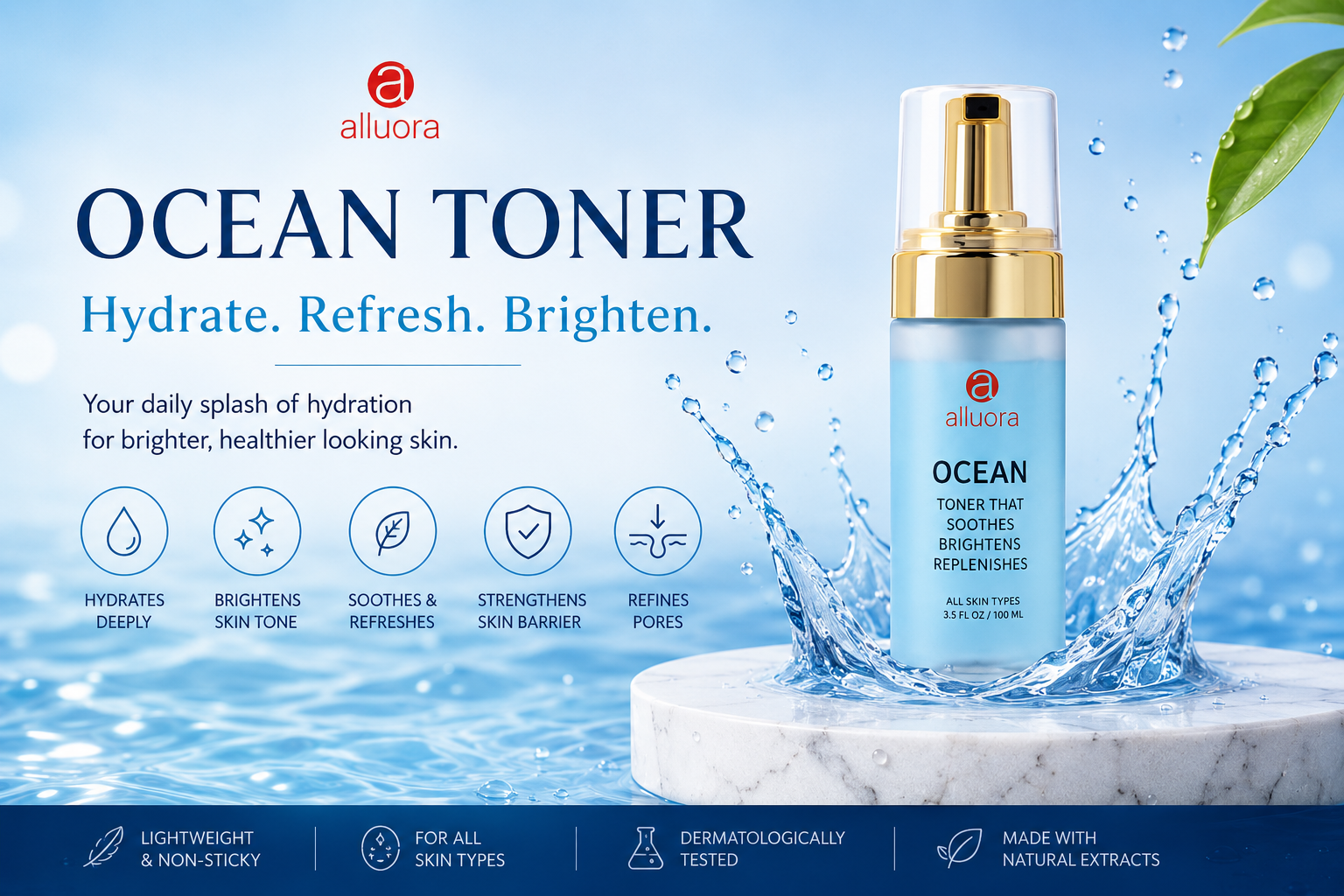
If you’re looking for a toner to complement your routine for uneven skin tone, the Alluora Ocean Toner is formulated with a blend of hydrating, soothing, and antioxidant-rich ingredients.
Its formula includes:
Rather than acting as a standalone solution, a toner works best as part of a complete skincare routine used consistently over time.
Explore the product: https://alluora.com/product/ocean-toner/
Consistency matters more than using dozens of products.
Start with a gentle cleanser to remove overnight oil, sweat, and impurities without stripping the skin.
Apply a hydrating toner, such as Alluora Ocean Toner, using clean hands or a cotton pad.
This helps replenish moisture and prepares the skin for the next steps.
Choose a serum containing ingredients such as:
These ingredients help improve the appearance of uneven skin tone over time.
Apply a lightweight moisturizer to lock in hydration and support the skin barrier.
Healthy, well-moisturized skin is better able to recover from environmental stress.
Finish every morning routine with a broad-spectrum sunscreen of at least SPF 30, ideally SPF 50+ for prolonged outdoor exposure.
Sunscreen helps:
Skipping sunscreen can make dark spots more noticeable and reduce the effectiveness of your brightening routine.
Nighttime is when your skin naturally repairs itself.
A simple evening routine can support this process.
Gentle Cleanser
Hydrating Toner
Treatment Serum
Depending on your skin’s needs, consider ingredients such as:
Moisturizer
Seal in hydration with a nourishing moisturizer to help maintain the skin barrier overnight.
Many people unintentionally prolong pigmentation by following habits that irritate the skin.
Avoid these common mistakes:
Squeezing or picking blemishes increases inflammation and raises the risk of post-inflammatory hyperpigmentation.
Even a few minutes of daily UV exposure can contribute to ongoing pigmentation.
Using harsh scrubs or strong exfoliating acids too frequently can damage the skin barrier and increase irritation.
Layering multiple potent ingredients without guidance can overwhelm the skin and cause redness or sensitivity.
Introduce new products gradually and monitor how your skin responds.
Dark spots develop over time and generally require consistent skincare to improve.
Patience, a balanced routine, and daily sun protection are key to achieving long-term improvements.
Most dark spots are harmless and can often be managed with a consistent skincare routine.
However, seek advice from a qualified dermatologist if you notice:
A dermatologist can determine the underlying cause and recommend appropriate treatment options when necessary.
Dark spots are usually caused by excess melanin production. Common triggers include prolonged sun exposure, acne breakouts, hormonal changes, skin injuries, ageing, and inflammation. Identifying the underlying cause can help you choose the most appropriate skincare routine.
Some dark spots, particularly those left behind after acne, may fade naturally over several weeks or months. However, deeper pigmentation such as melasma or long-standing sun spots often requires consistent skincare, daily sunscreen, and patience to improve their appearance.
The time varies depending on the type and depth of pigmentation.
Results differ from person to person, so consistency is more important than expecting immediate improvements.
Some of the most effective ingredients include:
These ingredients work in different ways to support brighter, healthier-looking skin.
Yes. Sunscreen is one of the most important steps in any skincare routine for pigmentation.
Without daily sun protection, UV exposure can make existing dark spots appear darker and contribute to the formation of new ones. A broad-spectrum SPF 30 or higher should be applied every morning and reapplied as needed during prolonged outdoor exposure.
Most acne-related dark spots are temporary and gradually fade over time. However, repeated inflammation, severe acne, or picking at pimples can make pigmentation last longer.
Treating acne early and avoiding picking can reduce the risk of post-inflammatory hyperpigmentation.
A toner is not a standalone treatment, but it can support a skincare routine by hydrating the skin, balancing moisture levels, and preparing the skin to absorb other skincare products more effectively.
Choosing a toner that contains ingredients such as Licorice Root Extract, Bilberry Extract, Green Tea Extract, and Sodium Hyaluronate can complement a routine focused on improving uneven skin tone.
A hydrating toner with antioxidant-rich botanical extracts can be a valuable addition to your skincare routine.
Alluora Ocean Toner contains:
These ingredients help hydrate the skin, support a brighter-looking complexion, and prepare the skin for serums and moisturisers. For best results, use it consistently as part of a complete skincare routine.
Yes. Many people with oily or combination skin benefit from a lightweight toner that helps remove residual impurities after cleansing while maintaining skin hydration.
Avoid alcohol-heavy formulations that may excessively dry the skin.
No.
Dark spots are a general term for areas of increased pigmentation.
Melasma is a specific type of hyperpigmentation that usually appears in larger, symmetrical patches and is often linked to hormonal changes and sun exposure.
Dark spots are one of the most common skincare concerns, but they don’t have to define your complexion. Whether your pigmentation is caused by acne, sun exposure, hormonal changes, or ageing, a consistent skincare routine can help improve the appearance of uneven skin tone over time.
The key is to focus on gentle, consistent care rather than looking for overnight solutions. Daily sun protection, hydrating products, and proven brightening ingredients can work together to support healthier-looking skin.
Remember these essential steps:
If you’re looking for a toner to complement your skincare routine, Alluora Ocean Toner is formulated with Licorice Root Extract, Bilberry Extract, Green Tea Extract, Witch Hazel, and Sodium Hyaluronate to hydrate the skin and support a brighter, more even-looking complexion.
While skincare products can improve the appearance of pigmentation, remember that results vary based on skin type, the cause of the dark spots, and how consistently you follow your routine. If you notice unusual changes in a dark spot or have persistent pigmentation that concerns you, consult a qualified dermatologist for personalised advice.
Achieving a more even-looking complexion is a journey that requires patience and consistency. By understanding what causes dark spots and choosing skincare products with proven ingredients, you can build a routine that supports healthier, brighter skin over time.
Small daily habits—especially wearing sunscreen, staying hydrated, and following a balanced skincare routine—often make the biggest difference. With realistic expectations and the right products, you can help your skin look smoother, more radiant, and more even in tone.
Your skincare journey doesn’t end after reading this guide. Use what you’ve learned to create a routine that suits your skin, stay consistent, and give your skin the care it deserves.

© 2025 Alluora Pte Ltd (Tax Number: 201306743W). All Rights Reserved. All Rights Reserved.