
Choosing the right cleanser can make a noticeable difference to how your skin feels and looks every day. If dullness, uneven-looking skin tone or visible dark spots are among your main concerns, a skin brightening cleanser can be a useful first step in your skincare routine.
But not every cleanser marketed as “brightening” works in the same way.
The ingredients, cleansing system, hydration support and suitability for your skin type all matter. More importantly, a cleanser should effectively remove daily impurities without leaving your skin feeling excessively dry or tight.
So, what should you actually look for before choosing a skin brightening cleanser?
This guide explains the key factors.
A skin brightening cleanser is a facial cleanser formulated not only to remove dirt, excess oil, makeup residue and other surface impurities, but also to support a brighter and more even-looking complexion.
Unlike a basic face wash that primarily focuses on cleansing, a brightening cleanser may contain ingredients commonly used in skincare routines targeting concerns such as:
However, cleansing is only one step.
A brightening cleanser should ideally be combined with appropriate serums, moisturisers and daytime sun protection as part of a complete skincare routine.
Before choosing a cleanser simply because the label says “brightening,” look more closely at its formulation.
Here are some of the most important factors to consider.
Start with the ingredient list.
Some brightening cleansers contain ingredients that are also commonly found in targeted pigmentation and uneven-tone skincare products.
Examples include:
The goal isn’t simply to find as many active ingredients as possible. Instead, look for a balanced formulation that combines cleansing with ingredients relevant to your particular skin concerns.
Niacinamide, also known as vitamin B3, is widely used in modern skincare formulations.
It is particularly popular in products designed for people concerned about dullness, uneven-looking skin tone and overall skin appearance.
Because niacinamide can be incorporated into cleansers, serums and moisturisers, it can form part of a broader brightening skincare routine.
Tranexamic acid has become increasingly common in pigmentation-focused skincare.
You may find it in products designed for people concerned about visible discolouration and uneven-looking skin tone.
When choosing a cleanser for a pigmentation-focused routine, the presence of ingredients such as tranexamic acid can therefore be worth considering.
Arbutin is another ingredient frequently associated with brightening and uneven-tone skincare formulations.
It is often included in products intended to improve the appearance of areas of uneven pigmentation and promote a more even-looking complexion.
A cleanser combining arbutin with complementary ingredients can therefore be particularly relevant if brightening is one of your skincare goals.
Brightening ingredients often receive most of the attention, but hydration is equally important when selecting a cleanser.
Your face shouldn’t feel extremely dry or uncomfortable after every wash.
Look for formulations that combine cleansing ingredients with hydration-supporting components.
For example, ingredients such as:
Glycerin is a humectant commonly used in skincare products to help attract and retain moisture.
Sodium hyaluronate is a form of hyaluronic acid frequently included in hydrating skincare formulations.
A brightening cleanser that also incorporates hydration-supporting ingredients can be particularly useful when you want effective cleansing without making dryness the trade-off.
If you’re building a routine around brightening and uneven skin tone, more isn’t always better.
A balanced formulation can also include ingredients associated with soothing and conditioning the skin.
Centella asiatica, for example, is widely used in skincare products formulated to support comfortable, well-conditioned skin.
This is particularly worth considering if your skincare routine already contains several leave-on products.
There isn’t one cleanser that is automatically right for everyone.
Start with your primary concern.
Look for a cleanser that effectively removes impurities while incorporating brightening and hydrating ingredients.
Dullness isn’t always purely a pigmentation issue. Dehydration, surface buildup and environmental exposure can also affect how radiant the skin appears.
Consider ingredients commonly associated with tone-focused skincare, such as niacinamide, tranexamic acid and arbutin.
A cleanser can become the first step in a broader routine designed around improving the appearance of uneven tone.
A brightening cleanser can support a dark-spot-focused routine, but it shouldn’t be expected to do all the work alone.
Combine cleansing with appropriate leave-on products and daily sun protection.
Pay particular attention to the overall formulation rather than choosing a product solely because of its brightening claims.
Look for hydration-supporting ingredients and avoid routines that leave your skin consistently feeling tight or uncomfortable.
Effective removal of excess oil is important, but overly aggressive cleansing isn’t necessarily better.
The goal is clean, refreshed skin that is ready for the next steps in your routine.
A regular cleanser primarily focuses on removing:
A skin brightening cleanser performs the same fundamental cleansing role but may additionally contain ingredients selected for concerns such as dullness, uneven-looking tone and visible pigmentation.
The important distinction is formulation.
A product doesn’t become more effective simply because “brightening” appears on its packaging. Check what ingredients are actually present and whether the overall formula suits your skin.
A brightening cleanser can be a supporting step in a skincare routine for dark spots, particularly when it contains ingredients commonly used in pigmentation-focused formulations.
However, realistic expectations are important.
Because cleansers are rinsed from the skin, they play a different role from leave-on products such as serums.
For people concerned about dark spots, a more complete routine may include:
Cleanser → Targeted serum → Moisturiser → Sunscreen during the day
This allows the cleanser to prepare the skin while leave-on products provide additional targeted care.
Using your cleanser correctly is just as important as selecting one.
A simple routine is:
Step 1: Wet your face and neck with water.
Step 2: Dispense an appropriate amount of cleanser into your hands.
Step 3: Work the cleanser into a lather if directed by the product instructions.
Step 4: Gently massage it over the face and neck using circular motions.
Avoid aggressive scrubbing. More pressure doesn’t necessarily mean better cleansing.
Step 5: Rinse thoroughly with clean water.
Step 6: Continue with the appropriate serum, moisturiser and other products in your skincare routine.
During the daytime, finish your routine with suitable sun protection.
Think of cleansing as the beginning of your routine rather than the entire brightening treatment.
After cleansing, your routine may include:
Depending on your routine and skin needs, this can provide an additional hydration or preparation step.
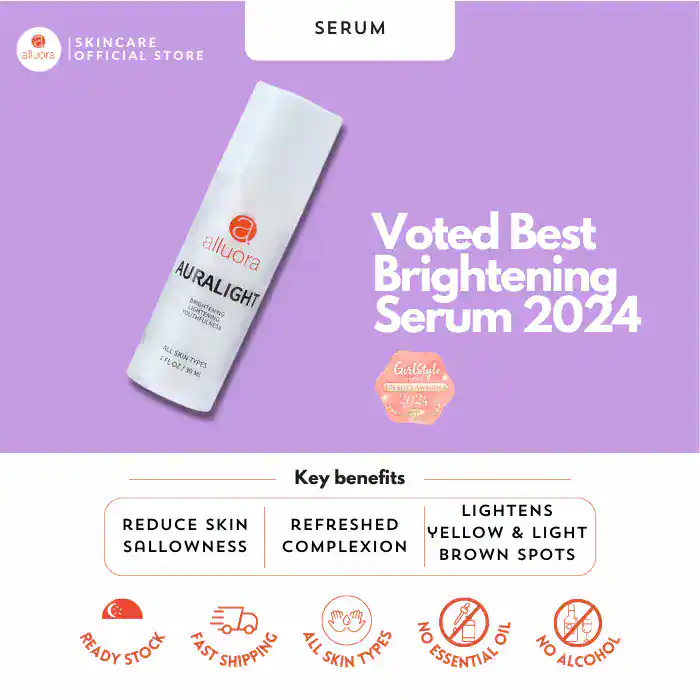
A serum can provide more targeted leave-on care for concerns such as dullness, uneven-looking tone or visible dark spots.
Moisturising helps maintain hydration and support the skin’s overall condition.
Daytime sun protection is especially important when your skincare goals include managing the appearance of pigmentation and maintaining an even-looking complexion.
Singapore’s hot and humid climate can influence how your skin feels throughout the day.
Sweat, sunscreen, makeup, excess oil and environmental impurities can accumulate on the skin, making consistent cleansing an important part of a daily skincare routine.
At the same time, you don’t necessarily need the harshest cleanser available.
The better approach is to choose a cleanser that effectively removes daily buildup while supporting your other skincare goals.
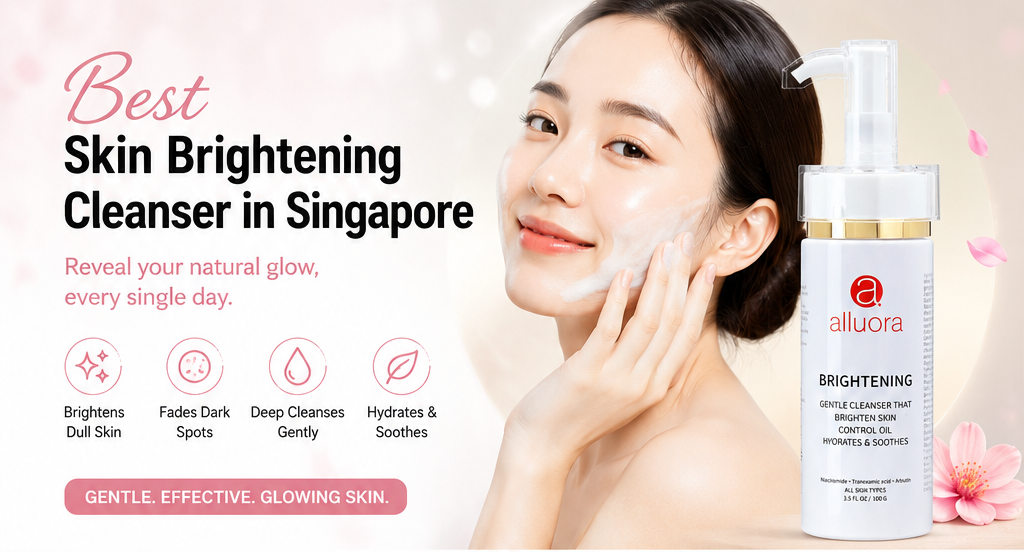
If brightening, dark spots and uneven-looking skin tone are priorities, look for a formula that combines effective cleansing with relevant brightening and hydration-supporting ingredients.
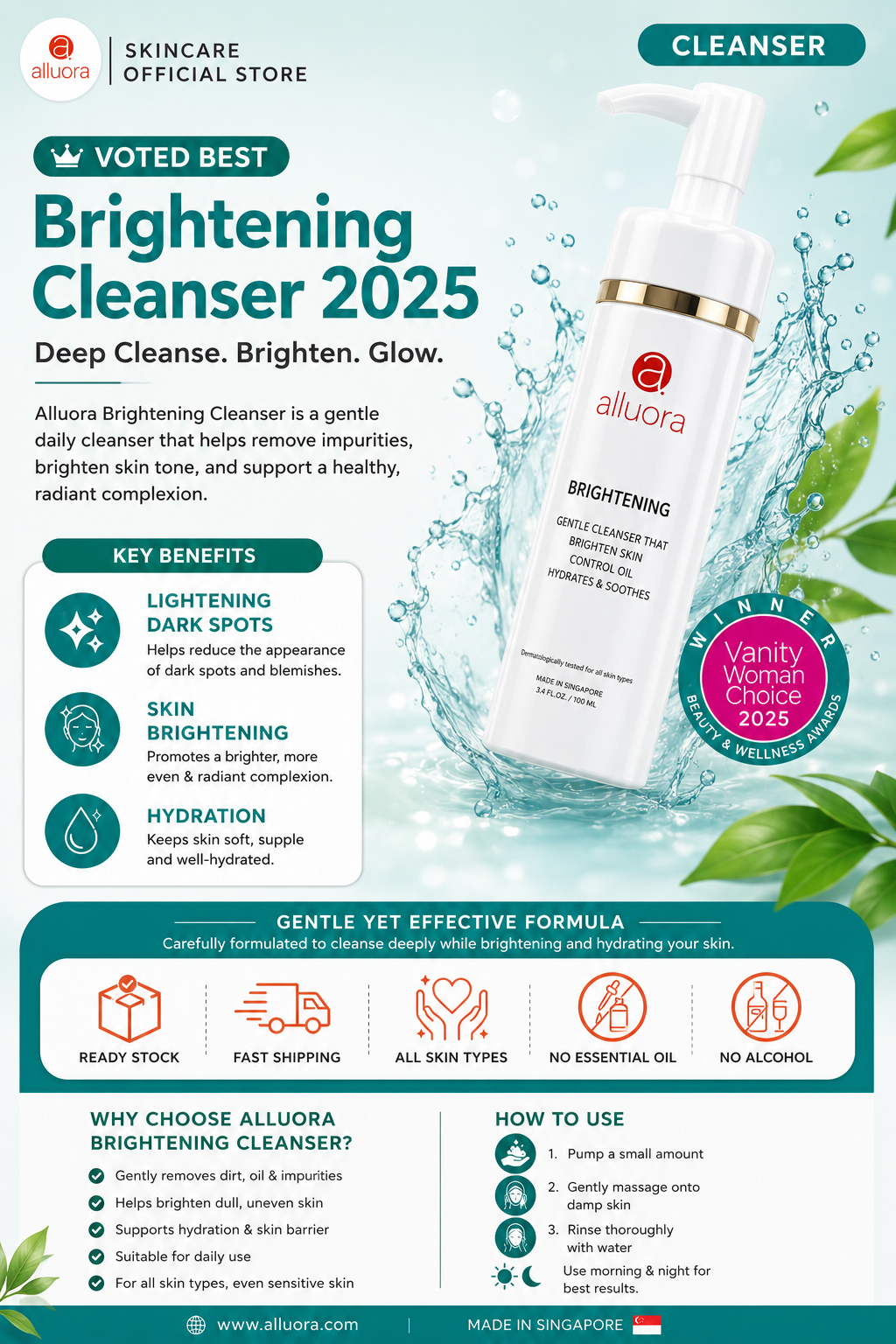
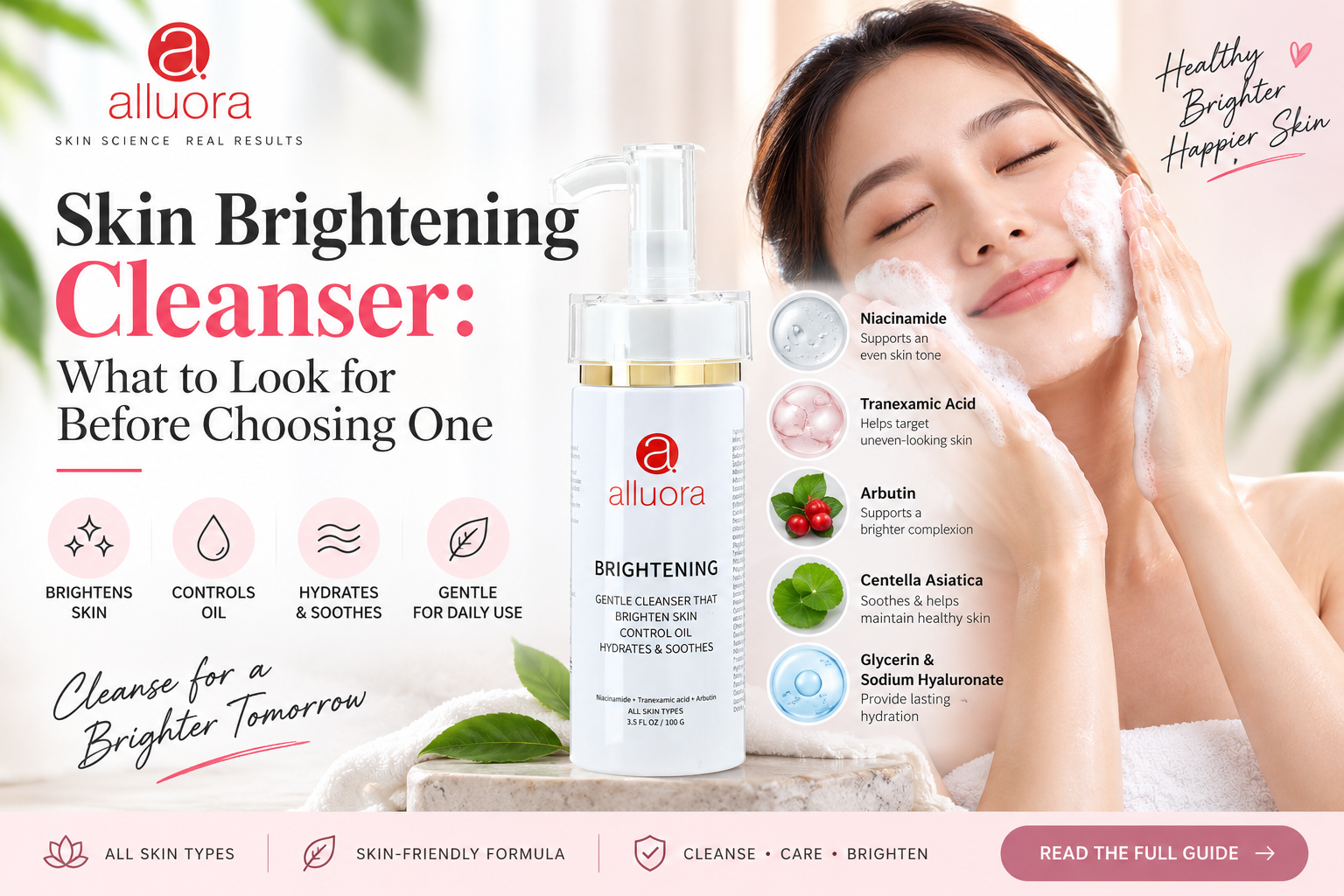
One example is the Alluora Skin Brightening Cleanser, formulated with Niacinamide, Tranexamic Acid and Arbutin.
Its published ingredient list also includes hydration and skin-conditioning ingredients such as Glycerin, Sodium Hyaluronate and Centella Asiatica Extract.
The cleanser is designed to remove surface impurities while supporting skincare concerns such as dullness, uneven-looking tone and visible dark spots.
Explore the Alluora Skin Brightening Cleanser
A skin brightening cleanser removes dirt, oil and other surface impurities while incorporating ingredients intended to support a brighter and more even-looking complexion. Depending on its formulation, it may be useful for people concerned about dullness, uneven skin tone or visible dark spots.
This depends on the formulation and your individual skin. A cleanser designed for daily use can generally be incorporated into a regular cleansing routine according to its usage instructions.
A cleanser should not be treated as a standalone solution for dark spots. Instead, it can support a broader pigmentation-focused routine that may include targeted leave-on products, moisturiser and daily sun protection.
Depending on your skin concerns, ingredients such as niacinamide, tranexamic acid and arbutin may be worth considering. Hydration-supporting ingredients such as glycerin and sodium hyaluronate can also be valuable.
A brightening cleanser can be particularly relevant for dull-looking skin because it removes surface impurities while potentially incorporating ingredients aimed at improving the appearance of radiance and uneven tone.
If you have specific concerns such as visible dark spots or uneven-looking skin tone, a targeted serum can complement your cleanser because serums are leave-on products. Follow it with an appropriate moisturiser and daytime sun protection.
Look beyond the words “brightening cleanser” on the label. Consider the ingredient list, cleansing system, hydration support, your skin type and your primary skin concern. The best choice is one that fits comfortably into your complete skincare routine.
Choosing a skin brightening cleanser isn’t simply about finding a face wash with the word “brightening” on the packaging.
Look at the complete formulation.
Ingredients such as niacinamide, tranexamic acid and arbutin can be relevant when your concerns include dullness and uneven-looking skin tone, while hydration-supporting ingredients can help make cleansing a more balanced part of your routine.
Most importantly, keep expectations realistic.
A cleanser is the first step, not the entire solution. For concerns such as dark spots and uneven-looking tone, combine appropriate cleansing with targeted skincare, moisturisation and consistent daytime sun protection.
By choosing your cleanser based on its formulation and your actual skin concerns, you can build a more focused brightening routine rather than relying on product claims alone.

© 2025 Alluora Pte Ltd (Tax Number: 201306743W). All Rights Reserved. All Rights Reserved.